Myths About Glycine
Glycine is one of the cheapest and most well-known amino acids, which some consider a "medicine for stress" and others a complete dud. The editorial team checked five of the most common claims about glycine and compared them with study results in order to separate real effects from marketing.
Where the myths about glycine came from
Glycine is the simplest amino acid: in its molecule, instead of a side chain there is only a hydrogen atom. Despite such a modest structure, it performs dozens of functions in the body — from building collagen to transmitting nerve impulses. It is precisely this versatility that became the ground for myths: when a substance "takes part in everything," it is easy to attribute to it the ability to "affect everything."
In the post-Soviet space, glycine has been sold in pharmacies for decades as a cheap remedy "for the nerves" in the form of 100 mg tablets under the tongue. This status has formed in many people the idea of it as a mild nootropic and sedative. Meanwhile, in the Western sports industry, glycine was rediscovered — as a supplement for sleep, joints, and glutathione synthesis, already in doses of several grams.
Two traditions — the pharmacy and the sports-nutrition ones — gave rise to contradictory notions. Some consider glycine a universal "medicine for stress," others a dud that the body synthesizes anyway. The editorial team examined the most common claims and compared them with what studies have actually shown.
It is important to note right away: the evidence base for glycine as a supplement is small. Most human studies are small samples, often sponsored by manufacturers, and many effects have been demonstrated only in animals. Therefore the honest answer to a significant portion of the questions is "perhaps, but there is little data."
Myth 1: a tablet under the tongue relieves stress
The most common notion is that one or two 100 mg glycine tablets under the tongue quickly calm you and improve concentration before an exam or an important event. In practice, there are practically no convincing independent randomized studies in the international literature that would confirm such an effect of precisely these doses in healthy people.
The problem is one of scale. A person gets several grams of glycine from the diet every day, and moreover the body itself synthesizes it from serine and other precursors. Against this background, 100 mg is a very small addition. Sublingual intake also does not make it "more powerful": glycine is a small water-soluble molecule that is well absorbed in the intestine anyway.
Studies that recorded changes in well-being used significantly higher doses — about 3 g before sleep. In the work of Bannai and colleagues (2012), participants with restricted sleep after such intake reported less fatigue and better daytime performance. But this is a different dose, a different goal, and a different mechanism than a "tablet for nervousness."
The feeling of calm after a tablet may be real for a specific person, but it is largely explained by expectation and the ritual of taking it. This does not mean that glycine is harmful — only that from pharmacy doses one should not expect a pharmacological effect comparable to anxiolytics.

Myth 2: glycine is a sleeping aid
The opposite extreme is the notion that several grams of glycine work like a sleeping drug. The study by Yamadera and colleagues (2007) did indeed show that 3 g of glycine before sleep improved subjective sleep quality and shortened the time to fall asleep, while polysomnography recorded a faster entry into the deep stages of sleep. But this refers to a moderate improvement, not to sedation.
The mechanism proposed by Japanese researchers in animal models (Kawai et al., 2015) is related to an effect on NMDA receptors in the suprachiasmatic nucleus of the hypothalamus. This leads to dilation of peripheral vessels and a drop in core body temperature, and such a drop is one of the natural signals to fall asleep.
Glycine does not suppress the respiratory center, does not cause dependence of the benzodiazepine type, and does not produce pronounced morning drowsiness. But neither does it "switch off" a person suffering from chronic insomnia. For clinical insomnia, the first line of treatment remains cognitive behavioral therapy and work with a doctor.
- What has been shown:improvement of subjective sleep quality and daytime well-being in small studies.
- What has not been shown:efficacy in chronic insomnia, comparability with sleeping drugs.
- What is important to remember:sleep hygiene, routine, and caffeine in the evening have a stronger effect than any amino acid.
Thus, glycine can be considered a mild auxiliary aid within the framework of overall sleep hygiene, but not as a replacement for treatment.
Myth 3: glycine helps build muscle
In the sports environment there is sometimes a claim that glycine is an "anabolic amino acid" because it is part of creatine and proteins. Indeed, glycine, together with arginine and methionine, is a precursor of creatine in the liver and kidneys. But this does not mean that additional glycine increases creatine stores in the muscles: synthesis is regulated by enzymes, not by the availability of raw material.
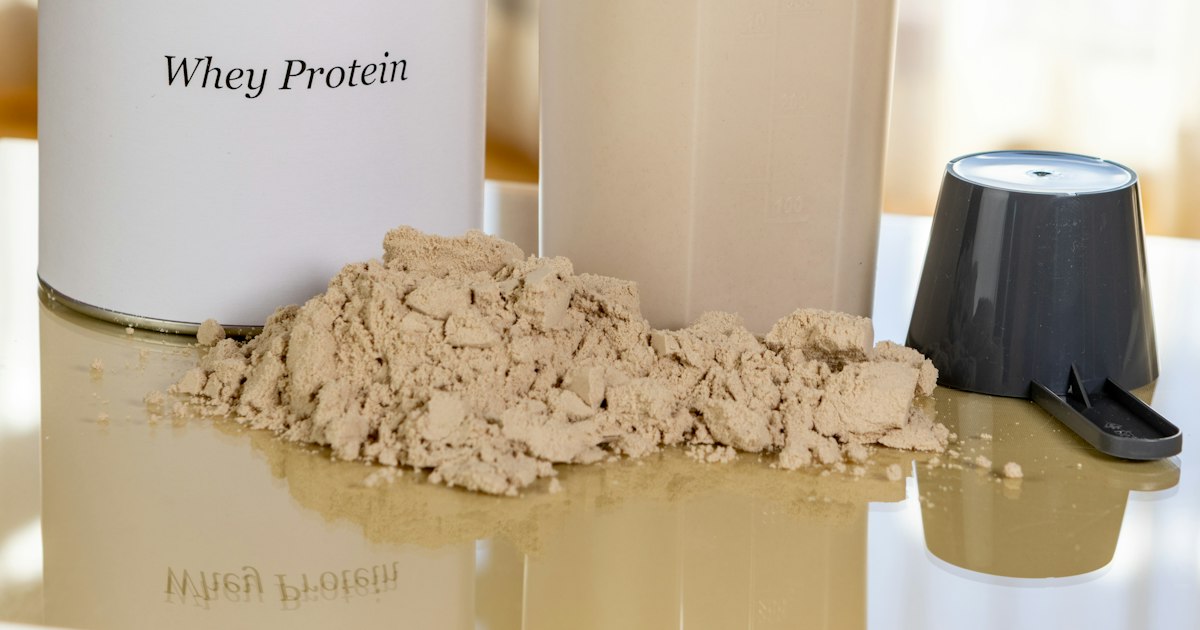
For stimulating muscle protein synthesis, the key role is played by leucine and the total amount of essential amino acids. Glycine is not one of the essentials, and there are no studies that would show a gain in muscle mass in healthy people from taking it. A protein supplement or ordinary food with a sufficient amount of protein is a much more effective strategy.
A more interesting direction is connective tissue. Collagen consists of roughly a third glycine, and the hypothesis of Meléndez-Hevia and colleagues (2009) suggests that endogenous glycine synthesis may not be enough for optimal collagen renewal. But this is a theoretical calculation, not a clinically proven deficiency.
Practical studies in sports are focused rather on gelatin or hydrolyzed collagen with vitamin C (Shaw et al., 2017) than on isolated glycine. There they observed an increase in markers of collagen synthesis, but a direct effect on injuries or tendon strength still requires confirmation.
| Claim | What the data say | Level of evidence |
|---|---|---|
| Glycine builds muscle | There is no direct confirmation | Absent |
| Glycine raises creatine in the muscles | Not demonstrated | Absent |
| Glycine is needed for collagen | Yes, this is a biochemical fact | High (biochemistry) |
| A glycine supplement improves the state of tendons | Only indirect data | Low |
Myths 4 and 5: "unnecessary" and "safe in any dose"
Skeptics claim that glycine as a supplement is pointless altogether, because the body synthesizes it itself. Formally, glycine is indeed a non-essential amino acid. However, some researchers classify it as conditionally essential: in certain states — aging, oxidative stress, intense tissue renewal — the need may exceed the capacity of synthesis (Wang et al., 2013).
An example is the works of the group of Sekhar (2011) and Kumar (2021) on the combination of glycine with N-acetylcysteine in elderly people. There the combination restored the reduced level of glutathione — the main intracellular antioxidant. These are small pilot studies, but they show that the "uselessness" of glycine is also an oversimplification.
Another extreme is the belief that glycine is safe in any quantity. In doses up to several grams per day it is usually well tolerated. However, in psychiatric studies, where glycine was given in doses of tens of grams per day as an adjunct to antipsychotics (Heresco-Levy et al., 1999), nausea and other gastric symptoms occurred. Such doses are the subject of clinical studies, not of independent intake.
Interactions should also be taken into account separately. Glycine acts on NMDA receptors, so people who take psychotropic drugs should discuss the supplement with a doctor. Pregnant women, children, and people with kidney or liver diseases should also obtain a consultation before taking high doses of any amino acid.
Another common confusion is equating glycine with magnesium glycinate. In glycinate the amino acid only "transports" the magnesium, and its amount in an ordinary supplement dose is small. The effects of magnesium glycinate are related primarily to magnesium.
Editorial conclusions
Glycine is a useful and, from a biochemical standpoint, well-studied amino acid, but most popular notions about it are either exaggerated or based on inappropriate doses. A pharmacy 100 mg tablet is unlikely to have a noticeable pharmacological effect, while doses of about 3 g before sleep have shown a moderate improvement in sleep quality in small studies.
Glycine is neither an anabolic, nor a sleeping aid, nor an entirely "empty" supplement. Its real niches — support of sleep, collagen synthesis, and glutathione — require further independent studies.
If you are considering glycine as a supplement, be guided by the doses from studies rather than by advertising promises, and remember that a sleep routine and a full-fledged protein diet matter more.
To round out the picture, the editorial team recommends reading our materials "What to Combine Glycine With," a review of magnesium glycinate and citrate, and an article on supplements for sleep recovery in athletes.
References
- Yamadera W, Inagawa K, Chiba S, et al. Glycine ingestion improves subjective sleep quality in human volunteers, correlating with polysomnographic changes. Sleep Biol Rhythms. 2007;5(2):126–131.
- Bannai M, Kawai N, Ono K, et al. The effects of glycine on subjective daytime performance in partially sleep-restricted healthy volunteers. Front Neurol. 2012;3:61.
- Kawai N, Sakai N, Okuro M, et al. The sleep-promoting and hypothermic effects of glycine are mediated by NMDA receptors in the suprachiasmatic nucleus. Neuropsychopharmacology. 2015;40(6):1405–1416.
- Meléndez-Hevia E, de Paz-Lugo P, Cornish-Bowden A, Cascante M. A weak link in metabolism: the metabolic capacity for glycine biosynthesis does not satisfy the need for collagen synthesis. J Biosci. 2009;34(6):853–872.
- Wang W, Wu Z, Dai Z, et al. Glycine metabolism in animals and humans: implications for nutrition and health. Amino Acids. 2013;45(3):463–477.
- Sekhar RV, Patel SG, Guthikonda AP, et al. Deficient synthesis of glutathione underlies oxidative stress in aging and can be corrected by dietary cysteine and glycine supplementation. Am J Clin Nutr. 2011;94(3):847–853.
- Heresco-Levy U, Javitt DC, Ermilov M, et al. Efficacy of high-dose glycine in the treatment of enduring negative symptoms of schizophrenia. Arch Gen Psychiatry. 1999;56(1):29–36.
- Shaw G, Lee-Barthel A, Ross ML, Wang B, Baar K. Vitamin C-enriched gelatin supplementation before intermittent activity augments collagen synthesis. Am J Clin Nutr. 2017;105(1):136–143.
Andriy Melnyk
A strength-sports coach and author of programs for beginner and intermediate levels. Writes about training planning.